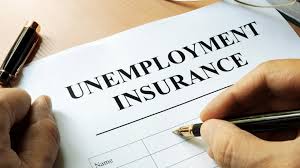
Unemployment Insurance – pros and cons
U.S. Politics July 27, 2020, Comments OffThe United States has never had a very protective measure in place for employees who lost their job as compared to its allies in Western Europe. France for example pays about 84% of previous salary for employees who’ve lost their job. Compare that to States like Florida where at most you’re getting $275 per week. Due to the Covid pandemic there’s been a lot of discussion as to how to best serve the unemployed in the United States, and as you can imagine the left and right have different opinions.
From the left
Progressives in congress feel strong about protecting people who’ve lost their job to no fault of their own. This can be seen by the initial CARES act that passed congress wherein in addition to the regular State unemployment, the federal government provided an additional $600 in weekly unemployment insurance.
To them, it’s all about making sure that those less fortunate don’t fall through the cracks and risk being evicted out of their apartment or house, and risk falling into poverty. The left would like to see the unemployment insurance program enhanced wherein it wouldn’t require congressional interference every time another recession hits the U.S. economy. This of course would fall on the employers to contribute more in higher payroll taxes, and most likely will result in States and the federal government having to add additional funding.
From the right
The conservatives in congress feel strongly about the fact that the government shouldn’t pay too much unemployment insurance to the unemployed as it would otherwise undermine the urgency for them to seek work.
Conservatives weren’t in favor of paying the additional $600 in Covid unemployment benefits and aren’t in favor of extending it either. They balked at the fact that many people making less than $40k per year were actually making more money on unemployment v. work, thus it would take away the incentive for them to go back to work or seek other forms of employment.
Based on the Republican governorship of the last two terms in Florida there has been a strong push to minimize the payments so that it would encourage people to seek out work immediately. Of course this works fine in a booming economy, but not the one during the Covid pandemic when everything shut down.
From the center
Maas Media feels strongly that a compromise can be reached here, and one that involves a long term solution.
- Total payments should never total more than 70% of former salaries. They should however pay at least $600 per week ($15/hr rate for 40 hours per week) as that is considered a living wage, but no more than $70k on an annual rate. So if you were making $150k before you lost your job, you can only get $70k max, not $105k (70% of $150k).
- Adjusted for inflation so that congress doesn’t have to step in 15 years from now when $600 doesn’t carry that far anymore due to inflation. Just like with social security, tie it to the rate of inflation set forth by the CBO.
- Requirements should be tied to receiving benefits. For example, an updated resume should be on file with the government (State and/or Federal), and mandatory classes offered by the labor department should be taken, plus you should have proof of having applied for ‘x’ number of open jobs per week. Turning down job offers within a 15% of previous salary should result in losing benefits.
- Upgraded State systems need to be put in place so that payments can be distributed easily, and the State has better ability to control the funds, and it ensures that the systems are better protected against fraud, which has been a major problem lately.
- Fully funded initially by the Federal government, but once the economy picks up again it builds a strong reserve, so that the next time a recession hits the country the States aren’t scrambling to fund it.
Author
