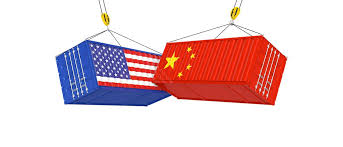
What to do about trade with China?
Foreign Politics, Opinion July 29, 2020, Comments OffEver since President Nixon opened up relations with China in the early 70s, the U.S. has been engaged in some form of a trade relation. Initially it was mostly China purchasing U.S. goods, mainly agricultural, but since the 1990s U.S. companies started rapidly abandoning manufacturing in the United States in favor for mainland China. This in turn has dramatically shifted the trade balance in favor of China.
Starting in the early 2000s, U.S. companies were starting to complain about unfair trade practices and accusing the Chinese government for making it extremely difficult to do business in China. There were ways to set up shop, but it meant in essence handing over the keys to the Chinese, and then only to find out a few years later that a Chinese company had imitated your product or service and at a lower price.
U.S. governments were very careful in their negotiations with their Chinese counterparts as cheap consumer goods coming out of China was good for the U.S. consumer. Let alone the fact that those U.S. companies, who were successful in setting up shop, put the pressure on the U.S. government to keep things as is, or keep the changes to a minimum.
However, ever since the 2016 election of President Trump it has become a central theme to make China the bad guy and use them as a political pawn for domestic political gain. This in turn has resulted in strained relations between the two countries and has resulted in tariffs on many goods, which in turn results in higher prices to consumers and has put an enormous financial strain on U.S. farmers on top of that.
So what to do?
From the left
Democrats in general feel strongly that the President (DJT) has bungled the trade negotiations with China and has put in a worse position then it was before. They feel that Trump made a strategic blunder by pulling out of the Trans-Pacific trade deal as it was meant to counter-balance the economic & trade power of China. It was an agreement between Australia, Brunei, Canada, Chile, Japan, Malaysia, Mexico, New Zealand, Peru, Singapore, Vietnam, and the United States.
For Democrats it comes down to restoring the Trans-Pacific trade deal, and expanding on it as in turn they feel it would put pressure on China to come to the negotiation table in good faith. This would lead to the U.S. being in a better negotiation position from a bargaining point of view and forcing China to make some drastic changes to trade practices, property & trademark protection, etc.
From the right
Republicans are split outside of the White House administration. In one camp you have the anti-China movement, who feel very strong about moving manufacturing back to the U.S. or at least to other countries in Asia Pacific region. They feel that would turn up the pressure on China to make concessions and start trading based on agree W.T.O. rules.
On the flip side, the Chamber of Commerce as well as agricultural interest groups would rather see a normalization of trade relations with China. To them, the upside of trade outweighs the downside of doing business in China. They feel that through negotiations we can ultimately get concessions from them, and they would like to see the Trans-Pacific trade deal revived, albeit with some changes.
From the center
Maas Media feels strongly that under any circumstances trade fosters peace on this planet. By having two countries, even from different political and cultural societies, trade with one another it provides an incentive to both countries as it increases wealth and prosperity for both. A trade war, or worse, an embargo, doesn’t serve either country in the short and in the long run.
Granted issues that arise in one country may be hard to swallow for the other country like a heavy handed crack down on a minority group, or restricting rights for its citizens. However, by increasing the trade volume it buys goodwill, influence, and thus a better chance of making subtle changes for the better in both societies.
Therefore, the U.S. would be wise to resurrect the Trans-Pacific trade agreement, albeit with some changes demanded by the Republicans, and then foster expansion of that agreement with other Asian Pacific countries. Secondly, through negotiations get the Chinese to agree to a multi-step trade plan that would benefit both countries, and at the same time saves face for both parties, plus….long term it can provide some changes for the better in China.
Don’t push the Hong Kong or Uighurs topic at the moment – that can come in the next phase, and shouldn’t be done in the open to begin with. Remember, each society is different. Just because one human right may seem a given in the U.S. doesn’t necessarily mean it should apply in a different country. Cultures are different, and the U.S. should respect that. Again, open trade, then use the gained power to press for changes, but do it in baby-steps and behind the scenes. It’s the only realistic way of making concrete changes.
Author
