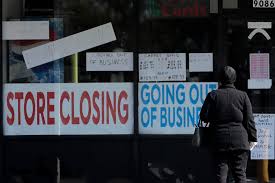
Should the U.S. government keep businesses afloat during a recession?
Opinion, U.S. Politics August 4, 2020, Comments OffThe current stalemate taking place in U.S. Congress over additional financial aid to individuals, businesses, and local/state governments due to the Covid pandemic is raising a lot of questions. For one, should the U.S. government even consider keeping businesses afloat during a recession? There are many who feel it shouldn’t. On the flip side, there are those who feel without it, the economy could get a lot worse.
From the left
House Speaker Nancy Pelosi (D-CA) already led the charge in passing another round of stimulus back in May. This $3 trillion package had no chance of passing in the Senate, but it was seen as an opening salvo in future negotiations. A big component of the bill was to provide additional funding to struggling small businesses. The paycheck protection program (PPP) was originally rolled out so that small businesses could get a loan. Provided they used 75% of the funds for payroll, they would then be exempt from having to pay back the loan.
In addition, the U.S. treasury opened up its purse for larger companies, so that they too could obtain financing in order to stay afloat. It seemed that both the Democrats, and Republicans had no objection to the initial rounds of stimulus. The economy was caving in by late Q1, and it sped up in April. This in turn assured that very few politicians dared to oppose the massive stimulus spending bills.
It’s highly likely that Congress and the White House will pass another round of stimulus during August. The size of it will most likely be between $1.5 and $2.0 trillion when it’s all set and done.
Democrats want to go all in, as they feel that supporting the unemployed avoids them from slipping into poverty. A majority of the unemployed are from lower income households, and due to the antiquated unemployment system in the U.S. they feel it’s a must to extend the unemployment insurance program.
In addition, Democrats are in favor of supporting small businesses as it makes up the majority of employment in this country. By providing financial aid, that in most cases will be forgiven anyway, they hope to stave off additional layoffs. To Pelosi (D-CA), and Schumer (D-NY) this is a no-brainer.
From the right
For Republicans it comes down to opening up businesses, and schools ASAP so the economy can rebound quickly. They claim that due to the generous unemployment insurance program a sizable portion of the working population doesn’t want to go back to work as unemployment insurance pays more than workers were making before. This in turn slows down the reopening of businesses, in particular small businesses.
Republicans however aren’t necessary opposed to the popular paycheck protection program. In addition, they haven’t been too vocal about the U.S. Treasury providing financing to larger businesses. The U.S. Treasury made half a trillion dollars available to the larger companies back in April. They also didn’t come with any restrictions like those for the PPP program. Granted, the companies have to pay it back with a low interest rate. However, many critics feel that this opens the door to distributing wealth to stockholders and executives rather than the employees.
In essence the stimulus proposals are very similar between the two parties. The only exceptions are that the GOP doesn’t want to aid the local and State governments. Of course, it varies in the amount of money as well. In the end however, they agree that individuals and businesses should get another round of stimulus.
From the center
Maas Media agrees with U.S. Congress that another round of stimulus is required, but it should no longer support financing to companies!
It boils down to a few simple economic principles:
- Consumers – Put money in the pockets of the U.S. consumers, especially those who find themselves unemployed. The U.S. consumer is the largest driver of economic activity. By not providing financial assistance to the tens of millions of Americans out of work you’re taking away a key economic driver for the U.S. economy.
- Businesses – Aiding businesses, many that were already in trouble prior to the pandemic, is going against free market enterprise principles. It only delays the inevitable for many of these businesses. The economy is rapidly changing to a digital online service oriented economy. Propping up businesses that haven’t been able to transform naturally is a bad investment of taxpayer money.
In the end, by pumping money into the consumers you will leave it into the hands of the consumer to decide where they’ll spend the money. Let them decide, not the government, as to what business stays in business or not. At least you’ll end up keeping two-thirds of GDP going, and the remainder will come from entrepreneurs who end up supporting those industries. That’s how a free market economy should function.
The U.S. government would be wise to overhaul the State Unemployment Insurance systems. This way any future payments during economic distress can be more efficiently distributed. Regardless, by propping up the UI program to the 70% of salary proposed, you ensure that consumer spending stays intact, and with that, you keep the economy thriving…
Author
